

From Pythagoras to Fourier and From Geometry to Nature

 Download Chapter PDF
DOI: https://doi.org/10.55060/b.p2fg2n.ch007.220215.010
Chapter 7. Grandi (Rhodonea) Curves
The curves with polar equation ρ = cos(nθ) (0 ≤ θ ≤ 2π) are also known as Grandi’s roses, in honor of Guido Grandi who communicated his discovery to Gottfried Wilhelm Leibniz in 1713. Curves with polar equation ρ = sin(nθ) (0 ≤ θ ≤ 2π) are equivalent to the preceding ones, up to a rotation of π/(2n) radians.
As can be seen in Figure 10, Grandi’s roses display n petals if n is odd and 2n petals if n is even. By using these polar equations it is impossible to obtain roses with 4n + 2 (n ∈ N ∪ {0}) petals. Roses with 4n + 2 petals can be obtained by using the Bernoulli Lemniscate and its extensions. More precisely:
The trigonometric function
The functions
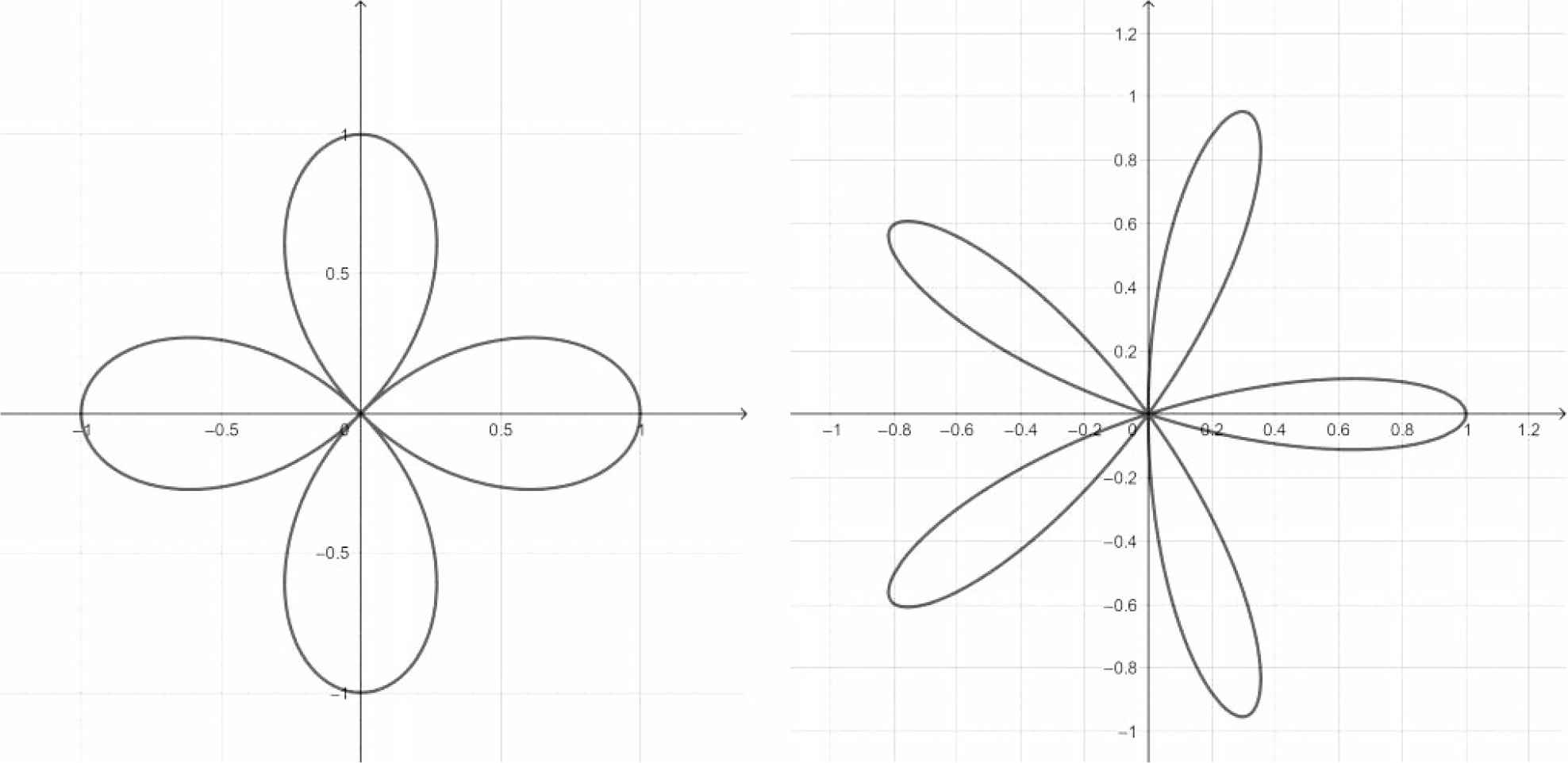
Rhodonea cos(2θ) and cos(5θ).
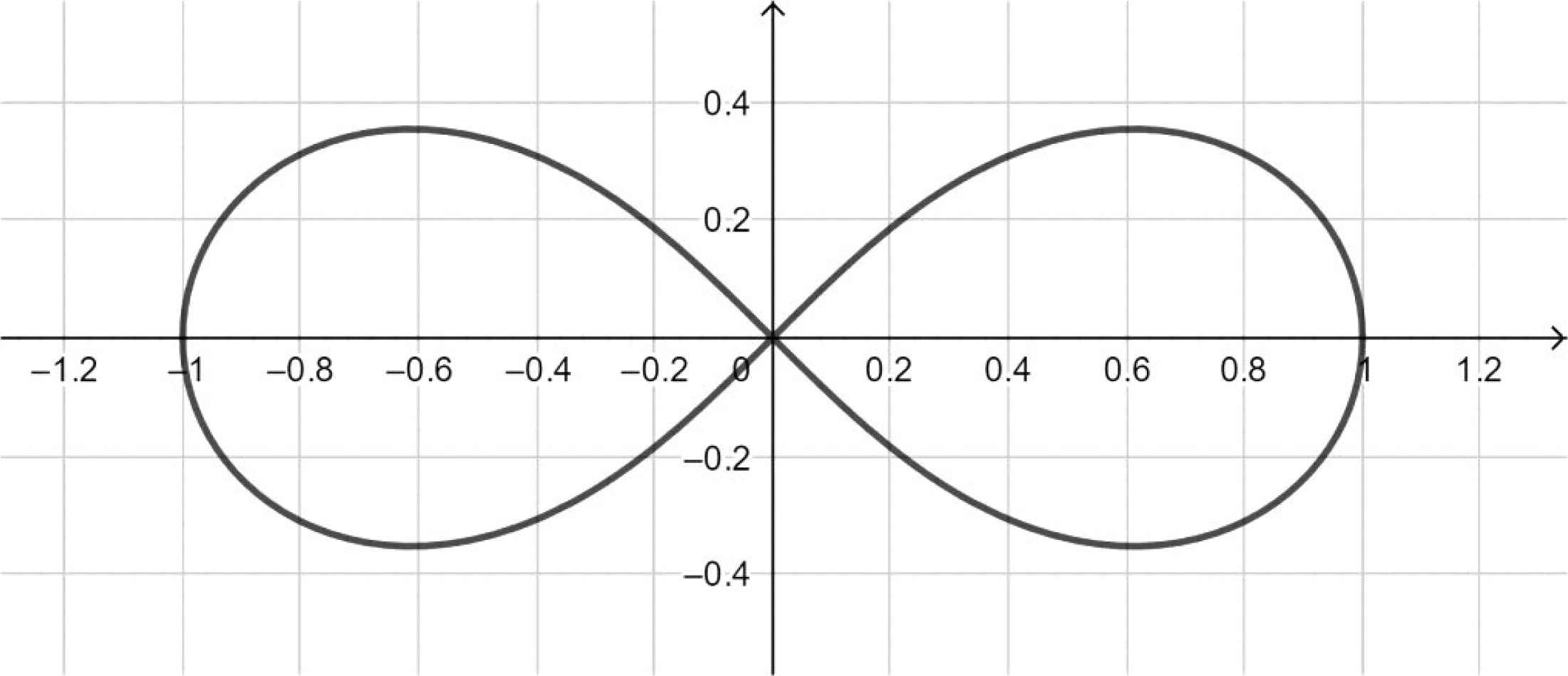
Bernoulli Lemniscate.
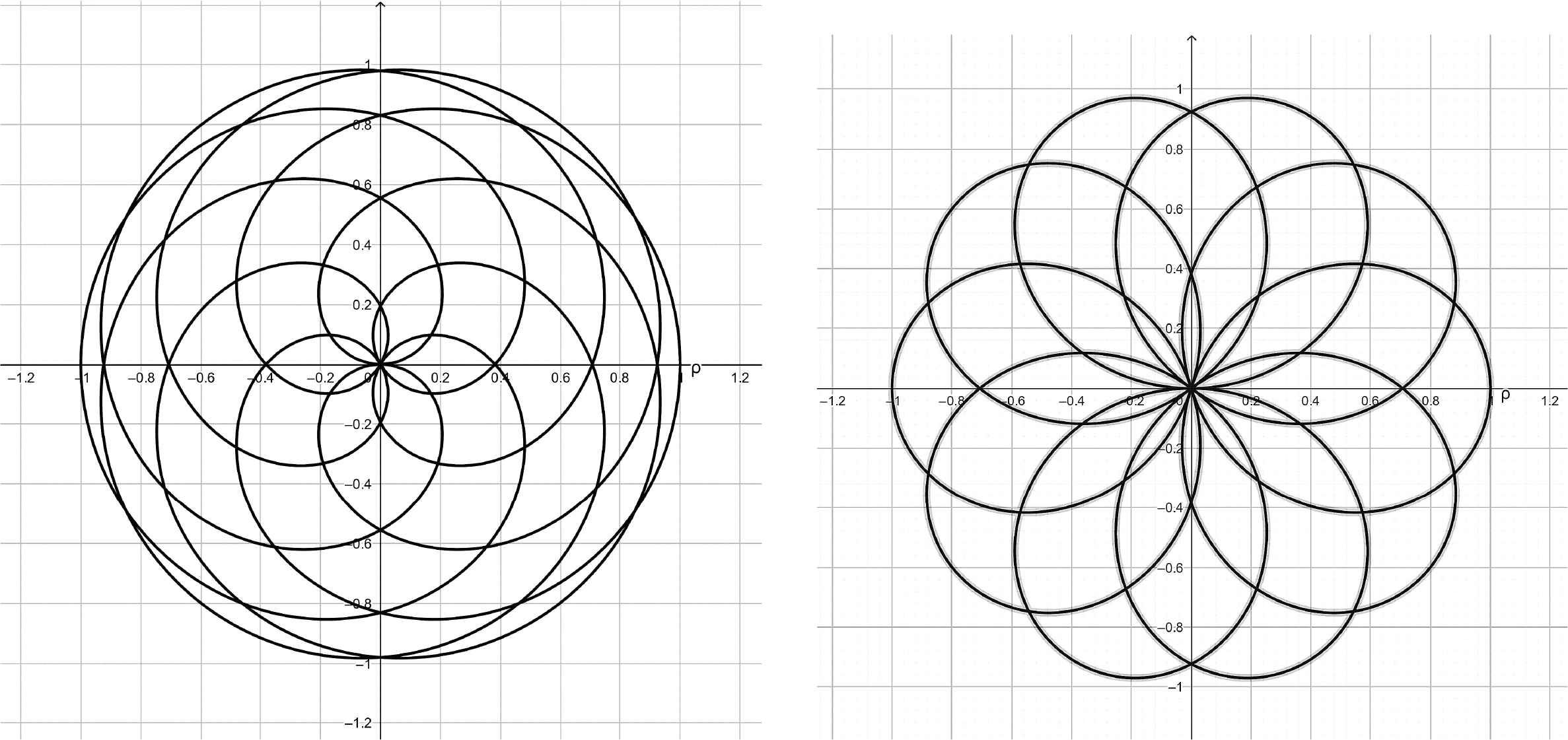
A few graphs of Rhodonea curves with fractional indices are shown in Figures 12–14.
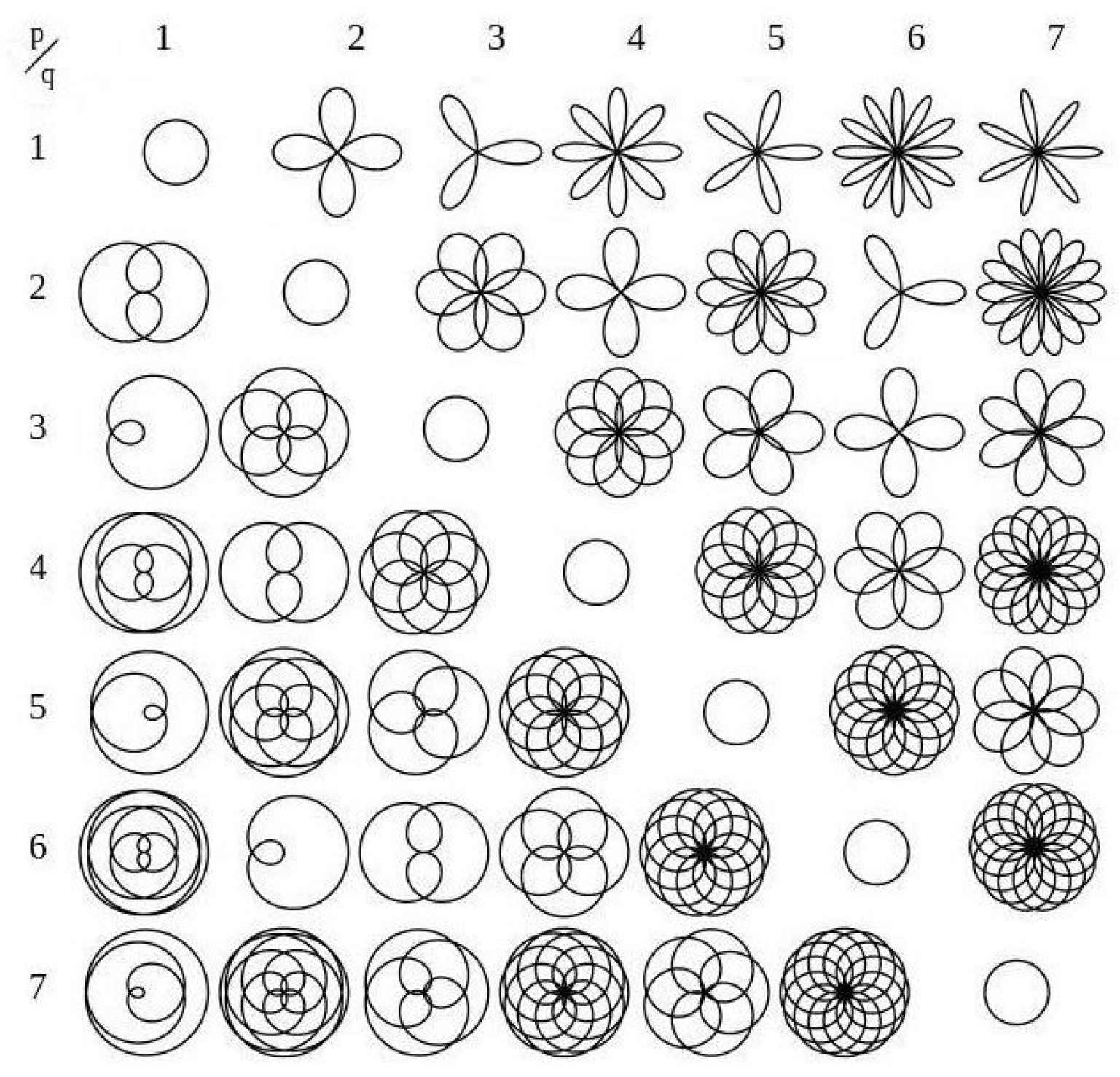
Rhodonea
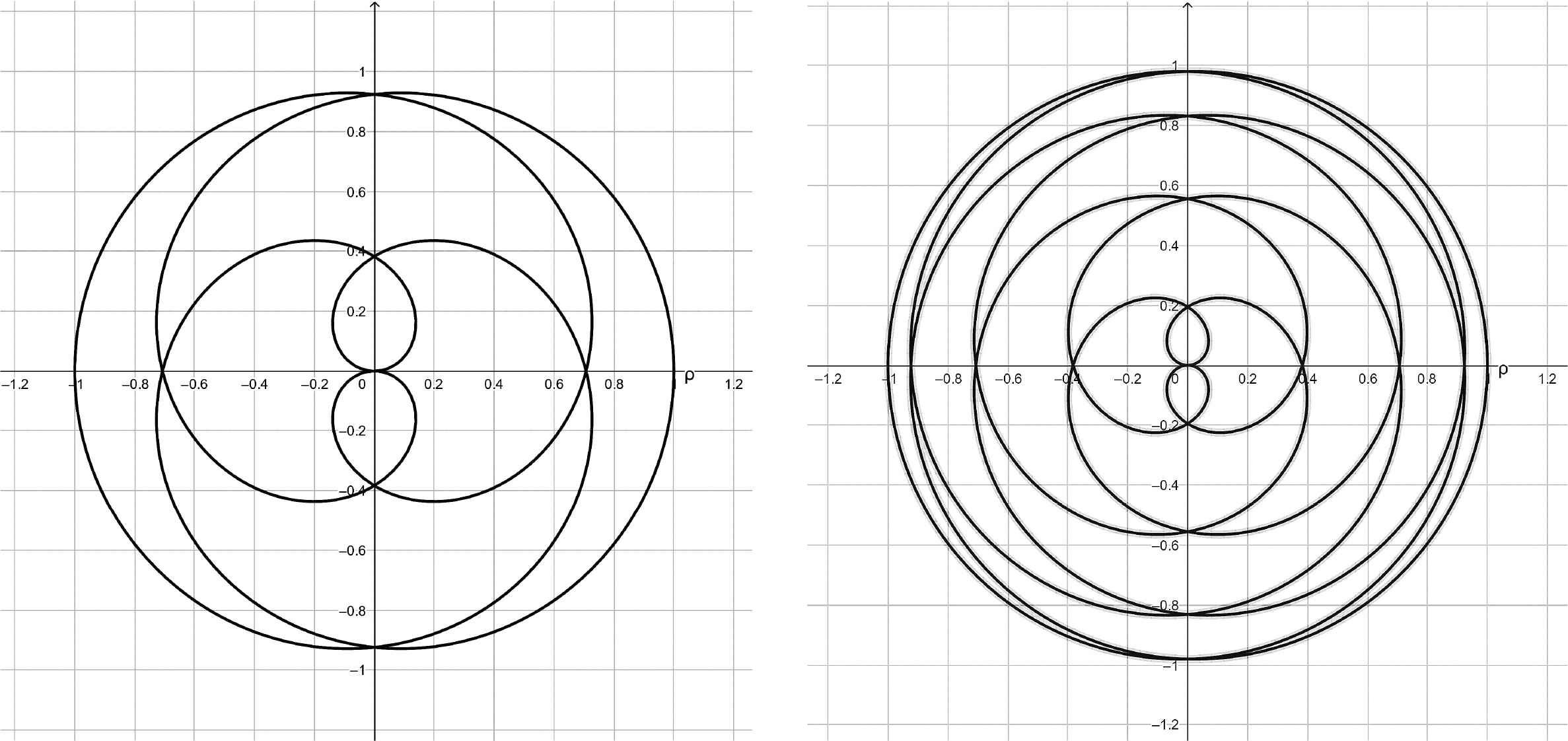
Rhodonea
Rhodonea

For more information, please contact us at:
info@athena-publishing.com


